
Stretching After Running: Exercises, Recovery and Injury Prevention
Running is both a liberating and demanding form of exercise. While it improves endurance and supports the cardiovascular system, it also places significant mechanical stress on muscles, tendons and joints. Yet most recreational and amateur runners tend to put recovery in the background, even though progress depends at least as much on what happens after training as on the run itself. Stretching after running plays a key role in this process.
It is not simply about reducing muscle soreness, but about supporting a complex physiological response that determines how effectively the training stimulus is incorporated and how quickly the body recovers.
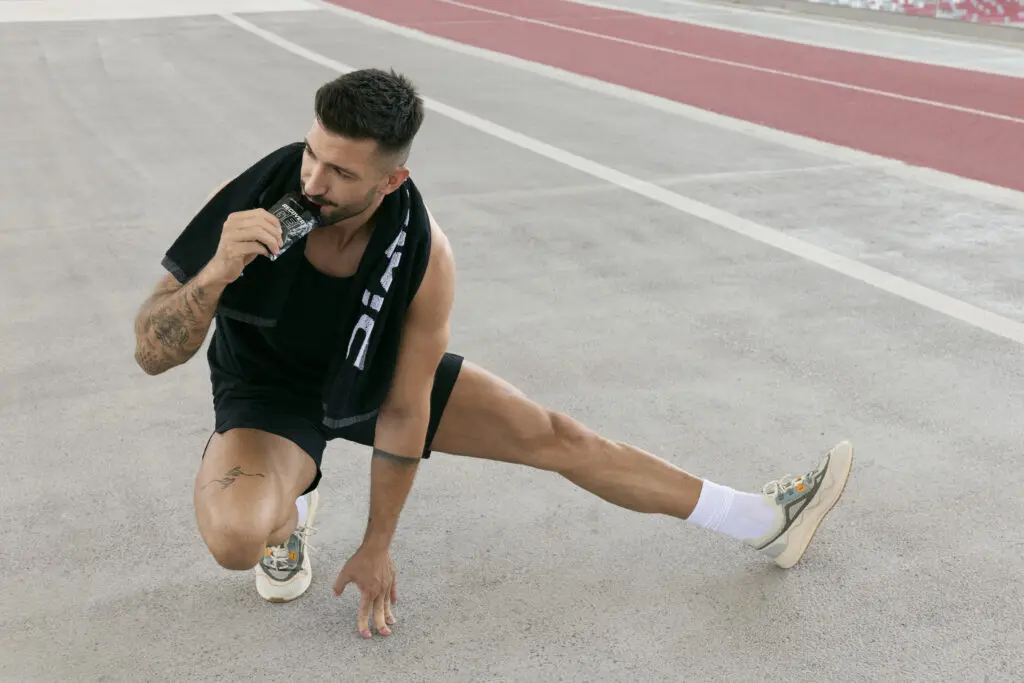
Why Should You Not Skip Stretching After Running?
During running, the muscles continuously alternate between concentric and eccentric action, meaning they work both while shortening and while lengthening. Concentric muscle action occurs when the muscle contracts, for example when pushing off the ground, as the calf or thigh muscle actively shortens to produce movement.
In contrast, during eccentric action, the muscle remains tense while lengthening to control and brake movement, for example when landing and controlling the body’s weight. This eccentric load places particularly high demands on muscle fibres and plays a significant role in the development of microdamage, which forms part of the recovery process, but without an appropriate cool-down and stretching it can also contribute to overuse. If this state persists, it can lead to reduced mobility and the development of compensatory movement patterns.
Stretching after training helps restore the muscles to their optimal length, improves local circulation and supports recovery processes. This is particularly important for people who regularly experience signs of overuse, such as shin pain while running or Achilles tendon pain after running. These conditions often do not develop suddenly, but are the result of long-standing muscular imbalances and inadequate recovery.
Stretching Before and After Running: Different Goals, Different Methods
Stretching before and after running serves different purposes, so it should not be performed in the same way. Before running, the goal is to activate the nervous system and prepare the joints for their range of motion, so dynamic movements are recommended. After training, on the other hand, static, held positions are used to relax the muscles and reduce muscle tone.
This distinction often becomes blurred in practice, even though it can have a significant long-term impact on injury risk and movement quality.
The Role of Stretching After Running in Injury Prevention
Common problems among runners (such as pain around the knee, Achilles tendon overload or discomfort around the shin) can often be traced back to muscle tightness and the resulting biomechanical changes.
Properly structured stretching exercises target the muscle groups under the greatest load, such as the calves, hamstrings, hip flexors and glutes. These muscles play a key role not only in running mechanics, but also in determining body stability and force transfer.
When these muscles become restricted, load is redistributed, which can eventually manifest as pain or injury. At this point, stretching alone may no longer be sufficient and more targeted intervention may be required, such as recovery methods used when treating a muscle strain.
More Than Stretching: A Comprehensive Approach to Recovery
In modern endurance sports, recovery does not rely on a single tool. The effectiveness of stretching after running can be significantly increased when it is combined with other methods.
Using an SMR roller, for example, acts on the connective tissue system (which connects and structures the muscles), which plays a key role in force transfer between muscles. Regular rolling reduces muscular adhesions and improves movement quality. At the same time, a massage gun acts on deeper muscle layers and can provide a quicker solution for releasing localised tension.
After intense training sessions or competitions, cold therapy (cryosauna, cold shower, ice bath) can also be an effective tool for reducing inflammatory processes. These methods do not replace one another; rather, they complement each other by supporting different levels of recovery.
In practice, this comprehensive recovery approach consists of several elements:
- static stretching immediately after training
- using an SMR roller to loosen muscles and fascia
- targeted treatment with a massage gun on problem areas
- cold therapy after intense exertion or competition
- adequate fluid and carbohydrate intake to support recovery
The Relationship Between Recovery and Sports Nutrition
Recovery is not only a mechanical process but also a metabolic one. Adequate nutrient intake is necessary for muscle repair, especially after longer or more intense runs.
After finishing a run, the role of nutritional intake changes: the focus is no longer on maintaining energy levels, but on supporting recovery.
During the recovery period, adequate protein and nutrient intake contributes to maintaining and building muscle mass, as well as to normal body function. Recovery Gel contains protein, amino acids and minerals, making it a practical addition to a balanced diet after training.*
The Balance Between Overtraining and Recovery
Lack of recovery can lead not only to local problems but also to systemic consequences. Overtraining develops when the balance between training load and recovery is disrupted for an extended period.
Its signs often appear gradually: declining performance, persistent muscle fatigue and loss of motivation. An appropriate recovery strategy, including stretching after running, mobility work and adequate nutrient intake, plays a key role in prevention.
In this process, a recovery run is also an important tool. Low-intensity movement increases circulation, helps remove metabolic waste products and supports muscle recovery without placing significant additional stress on the body.
When Is Additional Support Needed?
In certain situations, such as returning to running after an injury or in cases of instability, external supports can also help. A knee brace for running can provide temporary support in such cases, especially when the goal is to gradually rebuild the training load.
However, it is important to understand that these devices do not replace adequate muscular strength and mobility; they serve a complementary role.
The Foundation of Long-Term Progress: Conscious Recovery
The quality of recovery after running determines performance and injury-free training in the long term. Stretching after running is not an optional extra, but an integral part of purposeful training.
By complementing stretching with methods such as using an SMR roller, a massage gun or cold therapy, together with appropriate sports nutrition, for example by including a rapidly available carbohydrate source, we can build a comprehensive and effective recovery system.
In this way, regular running becomes truly sustainable: it does not only deliver short-term results, but also supports progress and health in the long term.
* Consuming the product does not replace a balanced, varied diet and a healthy lifestyle. Do not exceed the recommended daily intake. Keep the product out of the reach of young children.